Form I‑9 & E‑Verify Best Practices
This message has been approved by Renisha Gibbs, Associate Vice President for Human Resources and Finance & Administration Chief of Staff, for distribution to all Deans, Directors, and Department Heads.
An I-9 is a federal employment eligibility verification form required in the United States. Every new hire must complete this form, regardless of citizenship, to confirm their eligibility to work in the United States.
Completing the I-9 form is mandatory to comply with Federal law. Forms should be completed accurately and within specified timeframes. Failure to comply can result in fines and criminal penalties.
This is a reminder of key best practices to ensure full compliance with Form I‑9 and E‑Verify requirements.
Form I‑9 Completion Timeframes
Section 1 (Employee): Must be completed no later than the first day of work for pay.
Section 2 (Employer): Must be completed no later than the third business day after the employee begins work for pay. If employment will last less than three days, Section 2 must be completed on the first day of work for pay.
Important: If Section 2 cannot be completed on time because the employee has not presented acceptable documents, the employee must stop working until the required documentation is provided.
Employee Document Choice for Section 2
Employees must be allowed to choose which documents to present. They may provide:
Only accept the required documents (List A, or List B + List C). Do not request or accept additional documents.
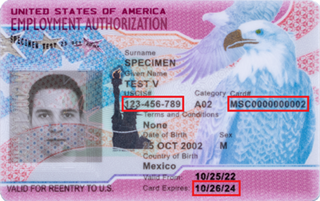
Common Error Example: The employee presents a List A document, “Employment Authorization Document (EAD) that contains a photograph,” that is incorrectly labeled as a List C “Employment authorization document issued by the Department of Homeland Security (DHS).” The EAD card is a List A document that establishes identity and employment authorization. Accepting or categorizing it incorrectly causes compliance issues.
Restricted Social Security Cards – Not Acceptable
A restricted Social Security card cannot be used as a List C document.
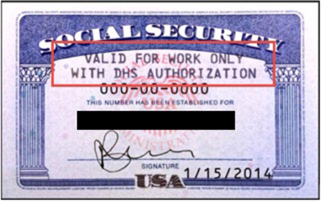
Restricted cards include any of the following wording:
- “VALID FOR WORK ONLY WITH DHS AUTHORIZATION”
- “VALID FOR WORK ONLY WITH INS AUTHORIZATION”
- “NOT VALID FOR EMPLOYMENT”
If an employee presents a restricted Social Security card, ask whether they have any other valid work authorization documents. Accepting restricted Social Security cards violates Form I‑9 rules and may result in non‑compliance.
E‑Verify Reminders
Case Processing
- Create the case no later than the third business day after the employee’s first day of employment.
- If a Tentative Nonconfirmation (TNC) occurs, contact the I‑9 Administrator for guidance.
- During a TNC, the employee must be allowed to continue working while resolving the mismatch.
- Employees must stop working only if the case results in DHS or SSA Final Nonconfirmation.
Photo Matching
- Photo matching is triggered automatically if an employee presents:
- Permanent Resident Card (Form I-551)
- Employment Authorization Document (Form I-766)
- U.S. passport
- U.S. passport card
- This is the only time you should make a front and back copy of the photo documents for E-Verify compliance. Onboarding document requirements are not considered when completing Form I-9.
Why Compliance Matters
Ensuring strong Form I‑9 and E‑Verify compliance is essential because it improves the accuracy and efficiency of employment verification processes, reduces the likelihood of administrative errors, promotes fair and consistent treatment of all employees, upholds federal legal requirements, and helps protect the institution from potential legal risks and penalties.
This is an ongoing opportunity to strengthen our Form I‑9 and E‑Verify processes and reinforce organizational compliance.
Questions? Contact Derik Lipford at dlipford@fsu.edu.